Tenpai · Understanding Mahjong
The four winds
East, South, West and North are more than four different pictures. In classic Mahjong, their names also organise seats and rounds at the table.
East, South, West and North bring the four compass directions into the tile set. Together with the dragons, they form the honour tiles: distinct symbols without a numerical sequence. In table Mahjong, the wind names also organise the seats and can name the rounds. This small group thus combines a sense of spatial order with a practical role in play. Direction tiles are documented in early surviving Mahjong sets.
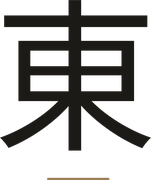
East Wind · 東
East begins the wind order. In Mahjong, its name becomes the starting point of a small system at the table: East is followed by South, West and North. The written character names the compass direction; calling it a wind connects that direction with movement in nature.
In classic table Mahjong: East is the dealer's seat name and usually the first round wind. A triplet or quad of East may score extra as the player's seat wind or the round wind. Winds do not form numerical sequences.

South Wind · 南
South is the second direction in the East–South–West–North wind order. As a tile, it brings part of this spatial order into a hand; as a seat name, it identifies a place at the table. South Wind is therefore both a word from nature and a precise game term.
In classic table Mahjong: South follows East in the seat order. A triplet or quad of South may score extra as the player's seat wind or the round wind. Winds do not form numerical sequences.
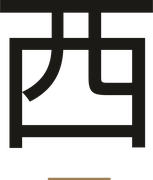
West Wind · 西
West is opposite East and belongs to the complete group of four compass directions. In Mahjong, its name identifies a distinct tile type and one of the four player positions. Together, the four winds turn individual directions into an order for the whole table.
In classic table Mahjong: West is the third name in the seat order. A triplet or quad of West may score extra as the player's seat wind or the round wind. Winds do not form numerical sequences.
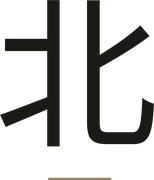
North Wind · 北
North completes the East–South–West–North wind order. Its tile joins the other three directions to form a complete group of four. The winds make a familiar system of orientation part of the language of play: they name both tiles and players' seats.
In classic table Mahjong: North is the fourth name in the seat order. A triplet or quad of North may score extra as the player's seat wind or the round wind. Winds do not form numerical sequences.
Origins of the direction tiles
The four direction characters already appear in early surviving Mahjong sets. 東 therefore belongs to an old core group of the game, forming distinct honour tiles alongside the three numbered suits.
The seat wind is a player's own assignment at the table; the round wind names a stage of the game. The same wind tile can consequently have an extra role in scoring a combination in classic Mahjong. This is separate from its compass direction and its image.
Recognising winds in Jade
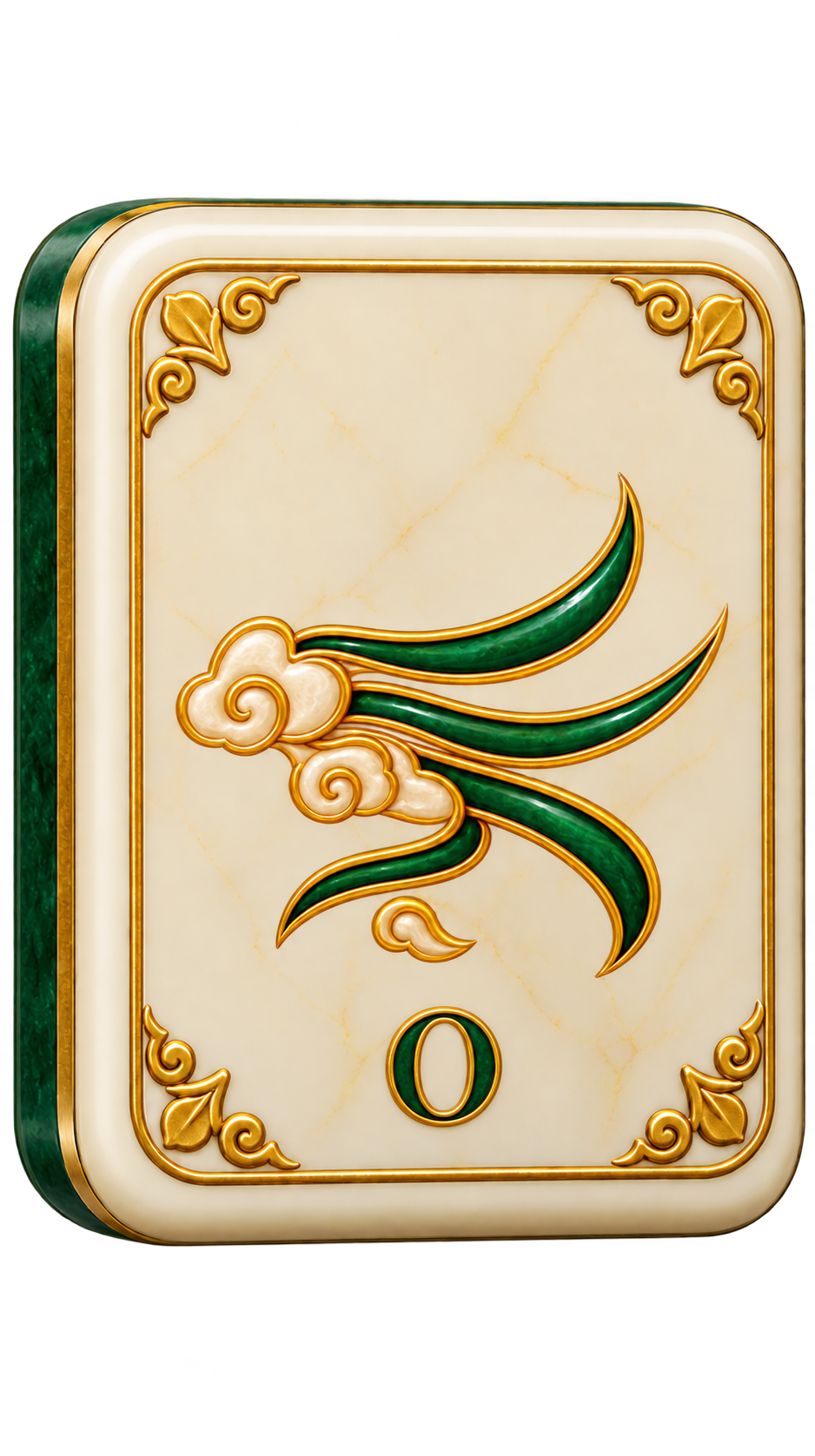
The Jade set depicts moving winds as green and gold ornaments. The letters O, S, W and N are part of the supplied tile artwork and stand for the German direction names: Ost (East), Süd (South), West and Nord (North). In KIRI, the Chinese characters identify the same winds.
A pair must always contain the same wind: O matches O, and S matches S. Similar swirls or the same colour do not make South and North a pair. A sequence of four different winds is not a move in Tenpai Solitaire.
The other honour tile group: dragons
Sources and context
These background texts distinguish documented tile history, linguistic meaning and the rules of today's game.
- Michael Stanwick · Early winds and honour tilesSection 3.3.2 compares 中 as centre with 中 as hitting the mark and documents the group 中、發、白 in the 1889/90 set. Section 3.5 discusses the 1909 set.
- A Guide to Mahjong · Table play and tile typesGuide hosted by the Mahjong International League, especially pp. 7–9, 15–17 and 22: suits, bonus tiles, combinations, and scoring for dragons and seat/round winds. Describes one rules variant, not Tenpai Solitaire.